

Leadership, Longevity And The Future Of Social Impact In South Africa
Leadership, Longevity And The Future Of Social Impact In South Africa
Amid the country’s current socio-economic climate, one reality is becoming increasingly clear:
impact without intentional, sustained fundraising is unsustainable.
When corporate social investment (CSI) funding shrinks, donors become more selective, and government support is uncertain, the old approach—where fundraising happens separately from program—no longer works. Instead, organizations need to align how they raise money with what they deliver, making funding part of core strategy.
This is not simply about survival. It is about continuity, scale and dignity in service delivery.
Few examples illustrate this more powerfully than the work of Ronald McDonald House Charities South Africa (RMHC South Africa).
From Charity To Shared Value: A New Funding Paradigm
What began as a social impact initiative of McDonald’s South Africa has evolved into a far more significant platform for collective corporate citizenship.
At the heart of this model is a fundamental insight: no single organization can carry the weight of social impact alone.
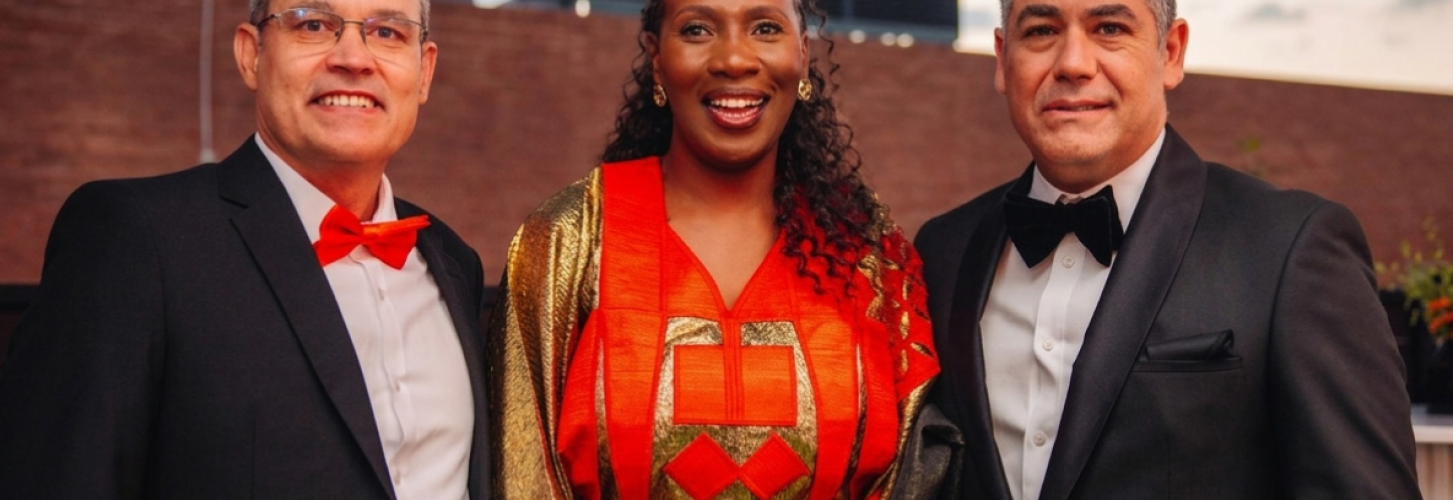
The inaugural CEO Sleep-In initiative, hosted at the Ronald McDonald House within the Nelson Mandela Children’s Hospital precinct, illustrates this shift. It went beyond symbolism and positioned fundraising as an act of leadership accountability and direct engagement.
Business leaders did not simply attend a gala. They showed up. stayed and experienced, however briefly, the reality faced by families navigating medical crises far from home. And in doing so, they demonstrated a critical evolution in philanthropy, moving from transactional giving to relational investment.
Why Fundraising Matters More Than Ever
Across South Africa, organizations are delivering meaningful, measurable impact. Yet many remain dangerously vulnerable, not because their programs are ineffective , but because their funding models lack resilience.
The implications are stark:
- Proven programs stall when funding cycles end
- Communities experience disruption and inconsistency
- Years of progress can be undone in months
Fundraising, in this context, is not an administrative function. It is the engine that sustains impact over time.
The model adopted by RMHC SA highlights three critical truths:
1. Sustainability Requires Diversification
While McDonald’s South Africa remains a cornerstone partner, RMHC SA has intentionally expanded its funding base. The call for corporates to adopt one of the 27 rooms is not merely a campaign, it is a risk mitigation strategy. It ensures that the stability of the house does not depend on a single funding stream.
2. Funding Must Be Tangible and Purpose-Linked
Each of the 27 rooms within the house represents more than infrastructure. It represents:
- A family kept together
- A parent able to remain close to her child
- A moment of dignity in crisis
This clarity transforms fundraising from abstract appeals into direct, visible impact.
“Our ambition at RMHC is clear, we strive to be present in every tertiary and academic hospital across the country, ensuring that no family has to face the burden of a child’s medical journey alone," Matshepo Msibi, Chief Executive Officer at Ronald McDonald’s House of Charities South Africa.
"This vision is made possible through the strength of our forever partnership with McDonald’s, a relationship we deeply treasure. Their unwavering support allows us to focus wholeheartedly on what matters most, which is caring for families without the constant concern of sustainability. Together, we are building a future where compassion, access, and support are within reach for all who need it.”
3. Small Contributions, Scaled Collectively, Drive Systemic Impact
Through everyday McDonald’s South Africa customer contributions, including R5 donations and incremental giving linked to Happy Meal purchases, RMHC SA has built a model where micro-philanthropy fuels macro-impact.
Over the past year alone, this translated into:
- Thousands of overnight stays
- Tens of thousands of meals
- Critical maternal support services in the form of access to lactation facilities.
Fundraising, when democratized, becomes a national movement rather than a niche activity.
The Leadership Imperative
The participation of CEOs in the Sleep-In initiative signals an important shift in how leadership is defined. As articulated by Max Oliva, leadership today is not only about driving growth, it is about stewarding influence responsibly.
This reflects a broader expectation of business in South Africa.
- To move beyond compliance-driven CSI
- To embed purpose within growth strategies
- To actively co-create solutions to societal challenges
- Fundraising, in this sense, becomes a leadership function, one that requires visibility, commitment and long-term partnership.
From Symbolism to Sustainability
The significance of the event lies not in the act itself, but in what it represents. It acknowledges that philanthropy must be measurable, partnerships must be enduring and impact must be designed for longevity. Most importantly, it reinforces that presence matters as much as funding. When leaders engage directly, fundraising shifts from obligation to ownership.
South Africa’s social sector stands at a crossroads. Organizations that invest in strong fundraising capabilities, diverse funding streams and deep, value-aligned partnerships will be the ones that endure and expand their impact. Those that do not, risk becoming casualties of an increasingly constrained funding environment.
The lesson from RMHC SA is clear: fundraising is not separate from impact; it is what makes impact possible.
The story unfolding at Ronald McDonald House is ultimately one of collective responsibility.
It is a reminder that:
- Sustainable impact is built through partnership
- Dignity is funded through commitment
- Hope is sustained through consistency
In a time of declining resources and rising need, the question is no longer whether organizations should fundraise.
The question is whether we are willing to reimagine fundraising as a shared national imperative.
Because when we do, we move beyond charity. We build systems that last.